
Equity

  • America at 250: Still Becoming

    On July 4, 2026, America turns 250 years old. That is worth honoring. This country is beautiful. It is vast, diverse, creative, imperfect, and still full of possibility. It has given the world powerful language about liberty, equality, rights, and self-government.

    Yet America has never fully lived up to its own promise.

    The Declaration of Independence said all people are created equal. That idea was revolutionary. It was also incomplete. At the time, many people were enslaved. Women could not vote. Indigenous people were displaced. Disabled people were excluded. Equality was declared before it was practiced.

    Still, America has moved forward. Slavery ended. Women gained voting rights. Civil rights laws challenged segregation. Disability rights became civil rights. Marriage equality expanded freedom. They prove that progress is possible.

    But progress is not the same as completion.

    Racism still shapes outcomes in healthcare, education, employment, housing, and justice. Sexism still limits safety, pay, opportunity, and bodily autonomy. Ableism still creates barriers for people whose greatest limitation is often society’s refusal to accommodate them. These injustices overlap. Race, gender, disability, class, and age can combine in ways that deepen inequality (Bixby, 2024; Dorsey Holliman et al., 2023; Sheldon et al., 2026; UN Women, 2025).

    It should never be beneath us, to be honest and patriotic.

    History will remember that millions of Americans willingly returned to office a man convicted on 34 felony counts, found liable for sexual abuse and defamation in civil court, and whose long-standing association with Jeffrey Epstein remains an enduring part of the historical record. Whether one views those facts through a partisan lens or not, they raise difficult questions about the moral expectations we place on our highest elected office.

    As a student of Locke, Aristotle, and Kant, I believe liberty requires moral responsibility. Freedom is not simply the right to do whatever one wants. Freedom requires reason, virtue, and respect for human dignity. A nation cannot call itself just if it excuses cruelty, rewards corruption, or treats some people as less worthy of protection.

    Still, I do not believe America is lost.

    I believe America is unfinished.

    We have taken one thousand steps forward and seven hundred steps back. That still leaves us ahead of where we began. That still gives us ground to stand on. That still gives us a path forward.

    The way back to justice is not mysterious. We need truth over propaganda. Evidence over rage. Courage over cowardice. Equal rights under law. Fair access to healthcare, education, housing, employment, and public life. We need leaders who understand that power is not a prize. It is a duty.

    On America’s 250th birthday, we can celebrate without pretending. We can love this country without lying about it. Real patriotism is not blind loyalty. It is stewardship. It is the willingness to protect what is good and repair what is broken.

    I still believe in America.

    I believe we can become more honest, more humane, and more just. I believe we can move closer to the promise we inherited but have not yet fulfilled. One day, if we are brave enough to keep working, America may truly become the land of the free, the home of the brave, and a place of truth and justice for all.

    References

    Bixby, L. E. (2024). Intersectional inequalities: How socioeconomic well-being varies at the intersection of disability, gender, race-ethnicity, and age. Research in Social Stratification and Mobility, 91, 100938. https://doi.org/10.1016/j.rssm.2024.100938

    Dorsey Holliman, B., Stransky, M., Dieujuste, N., & Morris, M. (2023). Disability doesn’t discriminate: Health inequities at the intersection of race and disability. Frontiers in Rehabilitation Sciences, 4, 1075775. https://doi.org/10.3389/fresc.2023.1075775

    Gould, R., Mullin, C., & Harris, S. P. (2021). Race, disability, and employment. ADA National Network Knowledge Translation Center. https://adata.org/research_brief/research-brief-race-disability-and-employment

    Martin, M. E., Haywood, C., Caldwell, K., Barry, C., Dawson, S., Hoppe, K., & Adekunle, T. B. (2026). Obstetric racism and ableism: A narrative review of barriers to obstetric care and maternal health outcomes for Black disabled women. Health Equity, 10(1). https://doi.org/10.1177/24731242261421862

    Sheldon, T., Dhand, R., & Mykitiuk, R. (2026). Racialized ableism and the need for intersectional discourse and action. In M. al Attar & C. Smith (Eds.), Emancipating international law: Confronting the violence of racialized boundaries. Oxford University Press. https://doi.org/10.1093/9780198935605.003.0016

    UN Women. (2025, June 12). Intersectional feminism: What it means and why it matters right now. https://www.unwomen.org/en/articles/explainer/intersectional-feminism-what-it-means-and-why-it-matters-right-now

    Walter, L. (2026). From injustice to solidarity: Linking gender-based discrimination experiences to cross-issue political engagement. Journal of Women, Politics & Policy, 1–21. https://doi.org/10.1080/1554477X.2026.2657153

  • The Misbranding of the Doctor of Behavioral Health: Reframing DBH Clinical and Management Practice for Integrated Healthcare, Quality Improvement, and Public Health Leadership

    by Dr. Amber D. Chapman-Gray, PhD, DBH

    Check out my latest article, published by the MSI Business Leadership Council and linked through The Praxis Journal: “The Misbranding of the Doctor of Behavioral Health: Reframing DBH Clinical and Management Practice for Integrated Healthcare, Quality Improvement, and Public Health Leadership.”

    This piece offers a candid look at the Doctor of Behavioral Health degree, including both the Clinical and Management pathways, and explores why the DBH remains underused, misunderstood, and underrecognized across healthcare, public health, and human services systems.

    Rather than viewing the DBH as a therapy-adjacent degree, this article reframes it as a systems-facing, solutions-focused doctorate with strong application in integrated care, quality improvement, population health, behavioral health leadership, and service delivery reform.

    For employers, educators, healthcare leaders, and DBHs themselves, this article invites a needed conversation: How do we better name, classify, hire, and deploy Doctors of Behavioral Health in the spaces where they are already prepared to lead?

    Read the full article at the MSI Business Leadership Council:
    https://fellow.msicertified.com/articles/the-misbranding-of-the-doctor-of-behavioral-health-reframing-dbh-clinical-and-management-practice-for-integrated-healthcare-quality-improvement-and-public-health-leadership

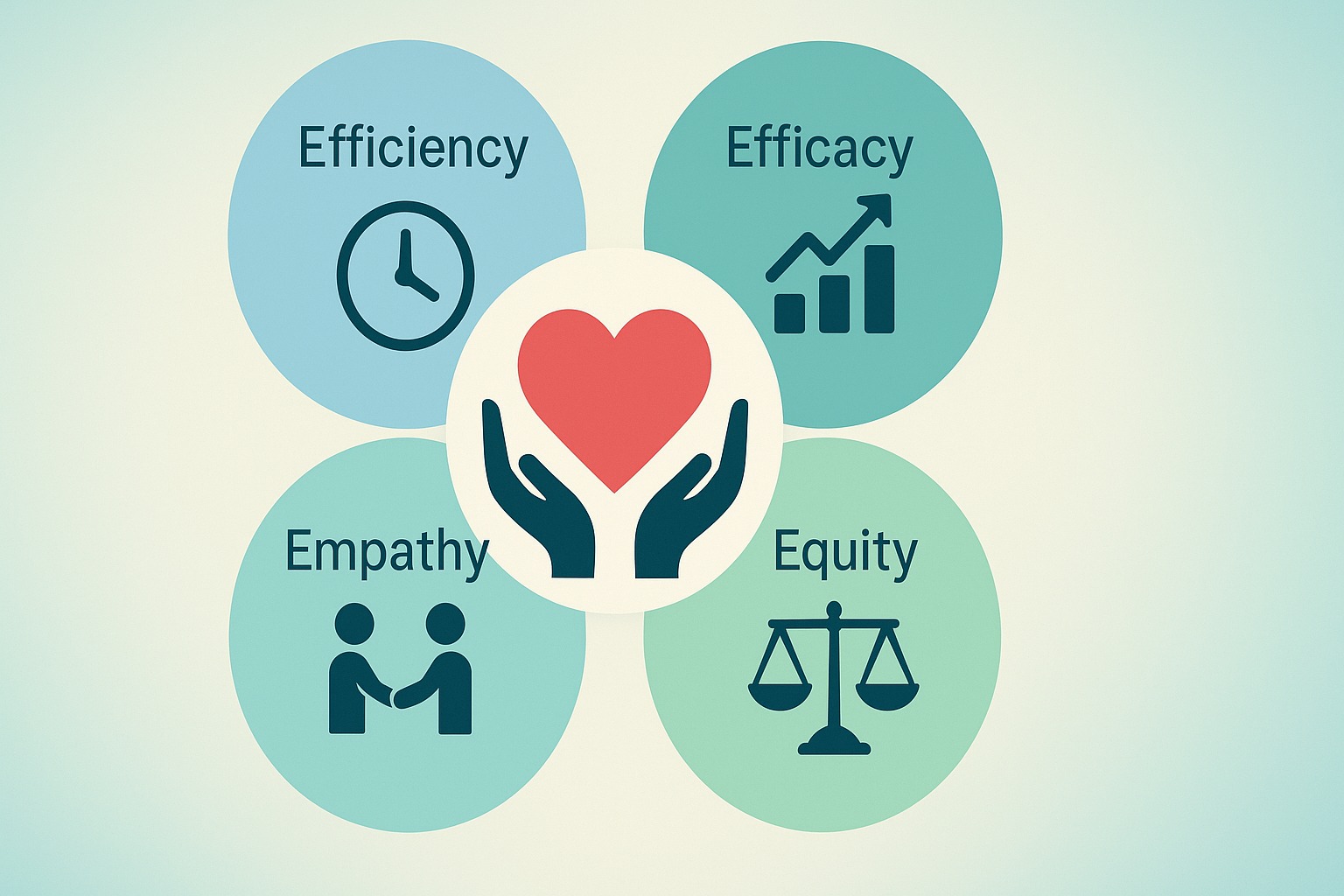
  • The 4 Es in Trauma‑Informed Care: Efficiency, Efficacy, Empathy and Equity

    The 4 Es in Trauma‑Informed Care: Efficiency, Efficacy, Empathy and Equity

    Gray’s Trauma‑Informed Care Services Corp (GTICSC) has used Efficiency, Efficacy, Empathy and Equity, the 4 Es, as a guiding formula since its inception in 2017. This demonstrates how the 4 Es can be used to build trauma‑informed systems of care for victims of violence, including survivors of domestic violence and “dark triad” abuse.

    Trauma & Violence‑Informed Care

    Trauma‑informed care (TIC) views service provision through a lens of trauma, requiring an understanding of trauma’s impact, awareness of triggers and vulnerabilities, and a commitment to avoid re‑traumatization (Ferencik & Ramierz-Hammond, 2017). It places the survivor’s experience at the center and emphasizes trust, safety, collaboration and empowerment. Trauma and violence‑informed approaches expand this lens to recognize how systemic violence and discrimination intersect with trauma, calling for organizational changes that increase safety, control and transformative behaviors, while fostering choice and collaboration (Canada’s Public Health Agency [CPHA], 2025). The 4 Es operationalize these principles within GTICSC’s integrated healthcare and educational programs.

    Efficiency: Streamlining Processes to Minimize Harm

    Trauma‑informed services must be delivered efficiently so survivors do not face unnecessary delays or bureaucratic burdens. Lean Six Sigma (LSS) and similar improvement methods are useful in this context. A quality‑improvement study in ophthalmology clinics showed that implementing Lean Six Sigma reduced median patient in‑clinic time from 131 minutes to 107 minutes and increased the number of patients seen per clinic session by 9 % (Kam et al., 2021). The study explained that Lean techniques reduce “waste” and Six Sigma reduces variation by defining, measuring and improving processes (Kam et al., 2021). A systematic literature review found that understanding challenges, readiness and critical success factors is essential for deploying LSS in healthcare and that such deployment can improve operational efficiencies and enhance patient and staff outcomes (McDermott et al., 2022). GTICSC applies these approaches to reduce wait times for services, streamline intake, and ensure survivors receive care without repeated trauma narratives.

    Efficacy: Evidence‑Based & Outcome‑Oriented Care

    Efficacy refers to the effectiveness of interventions in promoting healing and organizational wellness. The Substance Abuse and Mental Health Services Administration (SAMHSA) notes that trauma‑informed approaches improve patient engagement, treatment adherence, health outcomes and staff wellness (SAMHSA, 2025). Trauma‑informed nursing research shows that when nurses adopt a trauma‑informed lens, job satisfaction increases, risk of burnout decreases and patient experiences improve (Fleishman et al., 2019). Implementing organizational and clinical changes, such as staff training, safe environments and patient empowerment, helps transform systems (SAMHSA, 2025). GTICSC’s programs integrate Lean Six Sigma with trauma‑informed competencies, monitoring outcomes to ensure interventions remain effective and adopting continuous improvement cycles.

    Empathy: Understanding Survivors’ Experiences

    Empathy is the heart of trauma‑informed practice. In domestic violence settings, trauma‑informed care requires advocates to respond with supportive intent and to avoid re‑traumatization (Ferencik & Ramierz-Hammond, 2017). Services should respect individual choices, form partnerships that minimize power imbalances and focus on trust and safety. Empathic care is particularly important for survivors of “dark triad” abuse, a term describing relationships with individuals high in Machiavellianism, narcissism and psychopathy. These traits involve manipulation and a lack of empathy (Ferencik & Ramierz-Hammond, 2017). Machiavellianism is associated with controlling behavior, emotional abuse, and psychopathy (Furtado et al., 2024). It is linked to a higher propensity for intimate partner violence. Understanding these dynamics helps providers validate survivors’ experiences and design interventions that prioritize safety, and psychological healing. Education and reflective practice, such as GTICSC’s Transformation Through Education: The Impact of Trauma‑Informed Education on Victim Services Providers, foster empathy by helping providers recognize their own responses and avoid secondary trauma (Gray, 2025).

    Equity: Addressing Systemic Violence & Disparities

    Equity means ensuring all survivors, regardless of race, gender, sexuality or socioeconomic status, have access to trauma‑informed services. Trauma and violence‑informed approaches emphasize understanding how violence and trauma intersect with systemic conditions. Some of these conditions include poverty and discrimination (CPHA, 2025). They call for creating emotionally and physically safe environments, fostering choice, collaboration and connection, and providing strengths‑based support (CPHA, 2025). Domestic violence often leaves victims feeling powerless; recovery requires helping survivors regain control over the areas of their lives impacted by abuse (Ferencik & Ramierz-Hammond, 2017). GTICSC incorporates cultural humility and equity into all programs, courses, projects, and educational materials. This ensures that services for marginalized groups (e.g. immigrants, LGBTQ+ individuals) address unique barriers, as well as, the fact that staff reflect the communities served.

    Applied Practice: Integrating the 4 Es

    Applying the 4 Es in practice involves aligning efficiency, efficacy, empathy and equity. Organizational leaders should: Assess and streamline workflows using Lean Six Sigma or similar methodologies to minimize re‑traumatization and improve service capacity (Kam et al., 2021). Organizations need to learn how to implement evidence‑based interventions and train staff in trauma‑informed principles to enhance outcomes and reduce provider burnout (Fleishman et al., 2019; SAMHSA, 2025). In practice, providers working with victims of violence should foster empathetic relationships with victims by understanding trauma responses, recognizing dynamics of dark triad abuse, and empowering survivors through collaborative decision‑making (Ferencik & Ramirez-Hammond, 2017; Furtado et al., 2024). Providers can also embed equity by addressing systemic violence and ensuring culturally competent care recognizing that trauma intersects with race, gender and socioeconomic status. Dr. Gray’s work highlights the role of integrated healthcare solutions and education in transforming services. By combining process improvement, trauma‑informed training, and cultural humility, organizations can deliver high‑quality care to victims of domestic violence and dark triad abuse, improve provider satisfaction, and build transformative systems that prioritize Efficiency, Efficacy, Empathy and Equity.

    Keywords: Trauma‑informed care, Lean Six Sigma, Efficiency, Efficacy, Empathy, Equity, Domestic violence, Dark Triad, Integrated healthcare, Provider education

    References

    Public Health Agency. (2025). Trauma and violence-informed approaches to policy and practice. Government of Canada. Retrieved on 17 November 2025. https://www.canada.ca/en/public-health/services/publications/health-risks-safety/trauma-violence-informed-approaches-policy-practice.html.

    Fleishman, J., Kamsky, H., Sundborg, S. (2019). Trauma-Informed Nursing Practice. OJIN: The Online Journal of Issues in Nursing, 24(2).

    Ferencik, S.D. and Ramirez-Hammond, R. (2017). Trauma-informed approaches promising practices and protocols for Ohio Domestic Violence Network. Retrieved on 18 November 2025. https://www.odvn.org/wp-content/uploads/2020/05/ODVN_Trauma-Informed_Care_Manual_2020.pdf

    Furtado, B. F., Anacleto, G. M. C., Bonfá-Araujo, B., Schermer, J. A., & Jonason, P. K. (2024). Conflict in Love: An Examination of the Role of Dark Triad Traits in Romantic Relationships among Women. Social Sciences, 13(9), 474. https://doi.org/10.3390/socsci13090474

    Gray, A. D. (2025). Transformation Through Education: The Impact of Trauma-Informed Care Training on Victim Services Providers [Doctoral Dissertation]. ProQuest

    Kam, A.W., Collins, S., Park, T., Mihail, M., Stanaway, F.F., Lewis, N.L., Polya, D., Fraser-Bell, S., Roberts, T.V., Smith, J.E.H. (2021). Using Lean Six Sigma techniques to improve efficiency in outpatient ophthalmology clinics. BMC Health Serv Res 21(38). https://doi.org/10.1186/s12913-020-06034-3

    McDermott, O., Antony, J., Bhat, S., Jayaraman, R., Rosa, A., Marolla, G., & Parida, R. (2022). Lean Six Sigma in Healthcare: A Systematic Literature Review on Challenges, Organisational Readiness and Critical Success Factors. Processes, 10(10). https://doi.org/10.3390/pr10101945

    SAMHSA. (2025). Advancing trauma-informed care issue brief key ingredients for successful. Retrieved on 18 November 2025. https://www.samhsa.gov/sites/default/files/programs_campaigns/childrens_mental_health/atc-whitepaper-040616.pdf